Managing PPC for a bunch of clients can feel chaotic once an agency grows. The work has a lot of parts that have to move at the same time. One person is not enough. Someone still has to map out the campaigns, handle keyword research, write the ads, choose bid levels, set up tracking, check the data, and keep tuning results. On top of that, clients expect fast answers and they want outcomes they can actually see.
This is where white label PPC support can help. It gives an agency more PPC coverage without having to hire and manage a full in-house team.
Market research points to a need for options that scale more easily. Agencies also want spending to stay in check. With a good white label partner, an agency can deliver PPC know how under its own brand. The partner team usually does the bulk of the setup and ongoing tasks, while the agency stays in control of the client relationship.
What Are White Label PPC Services?
White label ppc services allow a digital marketing agency to outsource PPC campaign work to a specialized provider and present that work to its clients under the agency’s brand. The partner can manage campaign research, setup, optimization, reporting, and similar technical work.
This can help agencies that already cover SEO, site development, social media promotion, or content work, and now want to add paid ads to what they sell.
Rather than bringing in more staff right away, the agency can rely on a delivery team with experience. In my view, the biggest plus is flexibility. The agency can accept more PPC projects while not growing its internal workload as fast.
How White Label PPC Management Supports Agency Growth
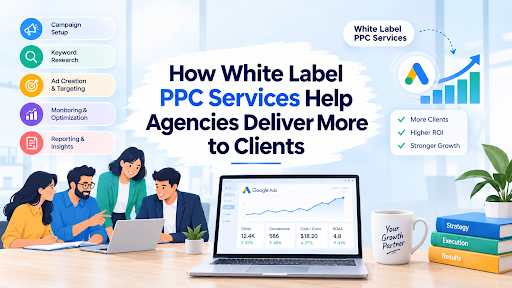
White label PPC management lets agencies use a clear workflow to run and refine client ads. With help from an outside PPC team, the agency can set up the basics, look up keyword ideas, design the campaigns, write the ad copy, set up conversion tracking, and keep an eye on results.
Because specialists handle the daily paid search work, the agency’s account team can stay on client calls and planning. This means the agency can take on more accounts without forcing its staff to master every part of Google Ads.
For instance, a local SEO firm might already handle rankings and traffic for a business. If the same client later wants to run Google Ads, the firm can add PPC support through a white label partner. This can strengthen the overall client service and deepen the relationship.
Deliver More Services Without Hiring a Large Team
Bringing on skilled PPC staff takes a lot. You need time, hiring work, onboarding, pay, tools, and day to day oversight. Many smaller agencies also do not get enough PPC tasks each month to keep a full in house crew busy.
White label PPC outsourcing can help here. Instead of setting up everything on your own, an agency can tap experts only when client demand calls for it.
With this setup, the agency keeps the client side. You handle pricing, updates, and the main marketing plan. The partner handles the PPC work in the background and runs the technical tasks.
From what I found in my research, this is a strong fit for seasonal swings. It also works well after you land multiple new accounts at the same time. In those cases, you add delivery support without growing your internal team for the long term.
Improve Campaign Execution
PPC results come from several pieces that work together. Keyword choices, match types, negative keywords, bid settings, ad quality, the landing page, audience targeting, and conversion tracking all play a role.
A white label team can handle this in a repeatable way. They can also check the campaign reports on a regular schedule and point out what needs fixing.
That is why white label PPC support can web design fort lauderdale let agencies deliver a fuller ad offering. Rather than just tacking PPC onto a standard page, the agency can run a clear campaign workflow with help from specialists.
Maintain Your Brand While Using Outside Expertise
A benefit of a white-label setup is brand consistency. The client talks to their own agency, not a new middle party. The client also gets updates from the same group. PPC then feels like part of what the agency already does.
The agency can set how the reports look. It can also choose the slide layout. The agency may steer the wording in the guidance. It can control the style of how advice is shared. This makes the work feel like one steady flow.
Even so, the agency should still set clear rules with the delivery partner. Decide who will speak with the client day to day. Lay out the approval process in plain terms. Each report should cover the same categories every time. Also agree on response time when a request comes in.
Support Enterprise PPC Management Needs
Big customers usually want more from their ads. They may sell many things at once. They may also run across several areas or different markets. Their budgets are often bigger too. Reporting can also be more detailed.
Managing enterprise PPC calls for tight setup. It needs good tracking. It also needs clear budget limits. Ongoing tweaks are part of it as well. A white-label partner that has handled large accounts can support an agency. This avoids the need to form a separate enterprise PPC team.
Enterprise PPC support can cover several tasks. That includes account checks. It can involve reworking campaigns. Conversion tracking is another part. Search term review is also common. Landing page edits and suggestions may be included. Bids often need changes. Performance reporting is provided too.
For agencies that want to sell to bigger firms, this added skill helps. It can make it easier to offer more types of paid media.
Create a Scalable PPC Delivery Process
Scalability is not just about taking on extra clients. Teams still need a method that keeps the work solid as the client list expands.
A white-label PPC process can set rules for onboarding new accounts. It can cover keyword research, setup reviews, tracking checks, campaign go-live, ongoing tweaks, and regular reporting. That also helps account managers see the steps more clearly.
An enterprise PPC firm may run hundreds or even thousands of campaigns across multiple regions. Still, the same idea holds for growing agencies. When the workflow is clear, it is less confusing and you can spot performance issues faster.
Improve Reporting and Client Communication
People often ask two things after a campaign: where the budget went, and what came back from it. If you write the report well, you connect the PPC stats to the actual business outcome.
Many agencies rely on the same dashboard setup. They list clicks, impressions, CPC, conversion rate, cost per lead, conversion value, and ROAS. Even so, the client needs more than a list. The report should explain what changed in results and what the team plans to do next.
With a white label PPC setup, the agency can receive the campaign numbers, the optimization log, and the regular update write ups. From there, the agency can translate the technical details into clear actions the client can understand.
Choose the Right White-Label Partner
Some partners are a better match than others. An agency should check the provider’s PPC background first. It should also look at how the team communicates, what the reports include, and how campaigns get run. The agency should confirm the provider can handle more than one kind of industry.
Next, the agency should ask specific questions. How does the provider track conversions. What do they do with negative keywords. How do they review search terms. What happens when the budget changes. How is ad testing done. How often are campaign audits done.
A good partner should feel like part of the agency. They should not act like a far off vendor. When both sides set clear expectations, work stays consistent. Clients tend to be happier too.
With white label PPC work set up the right way, the agency can still steer the client relationship. At the same time, it gets help from people who focus on PPC.
Why Agencies Should Consider a White-Label PPC Model
The best chance is to merge what the current agency already does well with hands on PPC work. The SEO team already knows how to build content, improve search reach, check site speed, and bring in customers. When PPC is added, the same agency can offer a wider marketing plan.
For businesses with complex advertising needs, enterprise ppc services can complement SEO, content, analytics, and other digital marketing activities. This integrated approach can help agencies address more parts of the customer journey.
From market research, many clients like to work with partners who can handle more than one marketing task. They do not want to juggle several separate vendors. A white-label setup, when run well, lets agencies meet that need. It also keeps the team’s own work from getting pulled in too many directions.
Final Thoughts
White-label PPC lets agencies add paid ads work without building everything in house. It also helps them take on more accounts and still deliver solid results. In most setups, the partner handles the work, and the agency stays the main point of contact.
A white-label PPC provider can manage the setup and planning. They can do keyword research, write ad copy, and set up conversion tracking. They can also run ongoing checks, make improvements, and send performance reports. What they cover depends on the deal.
If an agency uses a clear process, the daily workflow stays smoother. The internal team can stay on strategy and client communication. Outsourcing PPC in this way can also lower the risk of hiring a full PPC group too early, before the demand is real.
For bigger clients, enterprise PPC support may be needed. Enterprise PPC services can help with harder campaigns and higher budgets. A skilled partner can add steady steps and help the agency keep up with tougher ad needs.
The point is not just to add another line item. The aim is to keep delivering dependable value. At the same time, the agency model should be able to grow over time. In my review of this area, agencies that pair strong client ties with dependable specialist execution tend to build a steadier base for long-term growth.