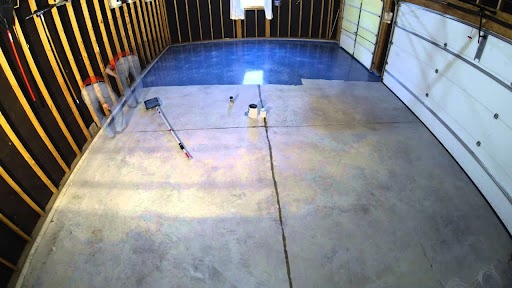
Most garages? Let’s be honest, they’re not exactly the highlight of the house. Usually, you’ve got a dusty floor, a mess of tools, and boxes that haven’t moved in years. But you don’t have to live with that—fixing it up is actually simpler than you’d think.
Lately, everyone seems to be raving about epoxy garage floors, and honestly, they have a point. You slap down a layer of epoxy, and suddenly that dull concrete turns into something shiny, clean, and way tougher than before.
Of course, before you go grabbing paint rollers, there’s always that one big question: What’s this going to cost? Good question. Let’s get right to it, no jargon, no nonsense. By the end, you’ll have a clear idea of what you’re signing up for, so you can finally give your garage the upgrade it deserves.
Epoxy Garage Flooring Cost at a Glance
I’ll cut to the chase—most people spend between $4 and $12 per square foot for epoxy flooring in the garage. That usually means you’re looking at a total somewhere between $1,200 and $6,000, depending on how big your garage is.
Some folks get lucky and pay under $1,000, especially if the space is small and the prep work is easy. On the flip side, if you want a custom design with special finishes, the price can climb past $8,000.
Location matters too. Take Woodland Park, NJ, for example—prices there tend to land right around the national average, but if you want top-tier work, expect to pay a little more. Skilled labor is in high demand, and that bumps up the cost.
If you’re wondering why prices bounce around so much, hang tight. That’ll all make sense in a second.
Epoxy Garage Flooring Cost for 2026
Prices have gone up a bit over the past few years. Materials cost more, and the best installers are booked up. Still, epoxy is one of the smartest ways to invest in your garage.
Think of it like buying a decent winter coat. You could get a cheap one that barely lasts a season, or you could spend a little more and stay warm for years. Epoxy’s the same—paying for quality upfront means less hassle down the road.
Smaller garages cost less, for obvious reasons—you’ve got less floor to cover. Bigger garages need more material, but sometimes contractors give you a better deal per square foot if you’ve got a lot of space.
Most people end up choosing something in the middle of the price range. It’s tough, it looks good, and it doesn’t feel over the top.
Epoxy Garage Floor Cost Per Square Foot
Not all epoxy floors are created equal. The basic stuff is cheapest. It gives you a clean, protective finish and works fine if your garage isn’t a war zone.
Mid-range floors are thicker and last longer. You’ll often see decorative flakes mixed in—those help hide dust and little scratches, plus they look sharp.
The premium options? That’s where you can get creative. Metallic swirls, custom colors, extra-thick layers—suddenly your garage feels more like a showroom than a storage space.
And in places like Woodland Park, NJ, most people go for that middle tier. It’s the sweet spot—strong, good-looking, and affordable enough that it won’t wreck your budget.
Real Cost Examples by Garage Size
Let’s make this real. Picture a 450-square-foot garage. If you pick a mid-range epoxy, at about $7 a square foot, you’re looking at roughly $3,150. Toss in some crack repair and a slip-resistant finish, and you might end up around $3,600.
Now, if you want to go all-out with a high-end metallic finish, plus extra prep work and thicker coatings, you could see that number jump to $5,500.
Same garage size, totally different price. That’s what materials and design choices can do.
What Affects Epoxy Flooring Costs
A lot goes into the final price of epoxy flooring, and knowing what drives the cost helps you sidestep unpleasant surprises. First, think about your garage size. More space means more materials, more prep, and more hours on the clock.
Then, there’s the state of your concrete. Cracks, stains, trapped moisture—these all need fixing before anyone can lay down epoxy. Prep work isn’t the place to skimp, either. Grinding the floor gives the epoxy something to grip. Skip this, and you’re asking for trouble—peeling is almost guaranteed.
The kind of epoxy you pick matters, too. Water-based versions usually cost less, but solid epoxy wins for strength and lifespan. If you want decorative flakes, custom colors, or that shiny metallic look, expect the price to climb. These touches make the floor stand out, but they take extra effort.
Now, let’s talk about experiences. Skilled installers charge more, but their work holds up, and you’re less likely to deal with expensive fixes later. When you want a floor that lasts, paying for expertise just makes sense.
Hidden Epoxy Flooring Costs That Catch Homeowners Off Guard
A lot of people don’t realize the coating is only part of the price. Old paint sometimes needs to come up first. Moisture barriers and primers might be necessary to make the coating stick and last.
Repairs can sneak in, especially if your floor’s taken a beating over the years. The good news? Reliable installers usually walk you through all these details upfront, so you’re not blindsided by extra charges down the road.
How to Estimate Your Epoxy Flooring Cost
No need to get fancy with calculations. Measure your garage, multiply the square footage by the average price per square foot, and add a buffer for prep work or upgrades.
So, if your garage is 400 square feet and you’re looking at $7 a square foot, you’re at $2,800 to start. Toss in some extra for repairs, and you get a much clearer picture. Just a bit of math can take a lot of stress out of budgeting.
DIY vs Professional Installation Cost
DIY kits look straightforward and definitely cost less upfront. But they take time, patience, and a steady hand. Professionals come with heavy-duty tools, proven methods, and an eye for issues before they get worse.
Plus, pro jobs usually come with a warranty, which is pretty comforting. If you want results that last, it’s usually smarter to go with trusted epoxy installers in Woodland Park. Cutting corners here often means you’ll pay to fix it a year later when the floor starts peeling.
How Long Epoxy Floors Last (Cost Per Year)
Sticker price doesn’t tell the whole story. How long the floor lasts matters just as much. Say you spend $4,000 and get 15 years out of it—that’s about $267 a year.
Seen that way, epoxy doesn’t look like a splurge. It’s a smart investment. When skilled installers do the job right, your floor just keeps delivering, year after year.
Simple Ways to Save Money Without Cutting Corners
Saving money always feels good, but saving smart feels even better. Start by getting a few quotes—prices jump around more than you’d think. Go for a clean, straightforward design instead of fancy patterns if you want to keep costs down without giving up quality. If you can, schedule the work during the slower months; you’ll probably snag a better deal that way. The biggest thing? Don’t chase the rock-bottom number just for the sake of it. Cheap today usually means you’ll pay more down the road.
Is Epoxy Garage Flooring Really Worth It?
For a lot of families, it absolutely is. A finished garage looks brighter, stays cleaner, and shrugs off daily messes. You won’t spend as much time on upkeep, and suddenly the garage actually feels like part of your home, not just a place to park the car. In nice neighborhoods like Woodland Park, NJ, upgrades like epoxy flooring even catch the eye of future buyers. But honestly, if you barely use your garage, something simpler might be all you need. The best choice simply comes down to how you use the space.
Why the Right Installers Make All the Difference
Even the best materials can fall flat if the installer rushes through the job. Skilled epoxy installers take the time to check moisture, fix up any problems, lay everything down just right, and let it cure properly. You can spot real experience in those little details—that’s what builds trust. A floor done right won’t just look good the first day; it’ll keep performing long after the newness wears off.
Final Thoughts
Epoxy garage flooring isn’t just about how it looks. You get durability, easy cleaning, and real long-term value all in one go. So, do your homework. Ask around. Don’t rush the decision. Above all, pick installers who care about doing the job right, not just getting it done fast. When everything comes together, your garage won’t just be that forgotten storage spot—it’ll actually feel like a polished, useful part of your home.