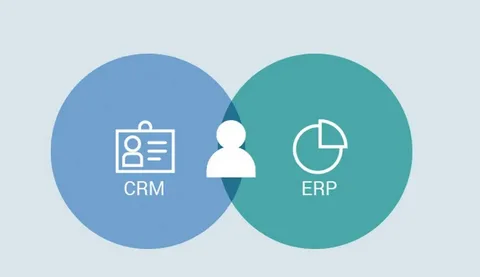
Enterprise productivity is shaped by how effectively organizations connect customer engagement, internal operations, and financial management. Fragmented systems often slow progress by creating data silos, increasing manual work, and limiting visibility across teams. This is where CRM ERP solutions and services become essential, enabling enterprises to unify processes and information into a single operational framework. When systems work together, productivity improves not only through speed but through accuracy, collaboration, and strategic clarity.
1. Centralized Business Data That Eliminates Operational Silos
Integrated data access for enterprise-wide efficiency. Siloed information restricts productivity by forcing teams to work with partial or outdated data. Centralization removes these barriers and builds operational consistency.
- Single source of business information
All customer records, transactional data, financial details, and operational metrics are stored within one system. This eliminates discrepancies caused by duplicate entries and ensures every department works with accurate, synchronized information. Consistency across data improves trust and reduces time spent verifying details. - Faster information retrieval
Employees access required data instantly without navigating multiple systems or requesting updates from other teams. This reduces administrative delays and allows staff to focus on execution rather than information gathering. Productivity improves as response times shorten across departments. - Improved cross-department coordination
Shared data allows sales, operations, and finance to collaborate seamlessly. When everyone works from the same information, misunderstandings decrease, and workflows progress smoothly from one stage to the next.
2. Streamlined Sales and Operations Alignment
Connecting customer engagement with execution. Enterprise productivity improves when customer-facing commitments align with operational capabilities. Integration ensures promises translate into deliverables.
- Accurate order processing
Sales orders automatically flow into operational and financial modules, reducing manual re-entry and associated errors. This accuracy shortens processing cycles and ensures customers receive what was promised without unnecessary delays or corrections. - Real-time inventory and availability visibility
Sales teams gain direct insight into inventory levels and production capacity. This enables realistic timelines and prevents overpromising, which protects operational stability and customer trust simultaneously. - Faster revenue cycles
Seamless handoffs between departments reduce delays in fulfillment, billing, and payment collection. Faster revenue realization strengthens cash flow and improves overall business momentum.
3. Automation That Reduces Manual Workload
Replacing repetitive tasks with intelligent workflows. Manual processes drain productivity and increase error risk. Automation standardizes execution and accelerates routine activities.
- Reduced data entry repetition
Information entered once becomes accessible across all relevant modules. This minimizes redundant work and lowers the risk of inconsistencies that slow down operations and reporting. - Workflow-driven task execution
Approvals, escalations, and notifications follow predefined paths. Employees spend less time tracking tasks and more time completing them efficiently, improving throughput across teams. - Lower operational errors
Automated processes reduce reliance on manual intervention, minimizing mistakes that require time-consuming corrections. Accuracy improves, and productivity losses from rework are significantly reduced.
4. Real-Time Insights That Support Faster Decisions
Visibility that turns data into action.Delayed insights limit productivity by slowing response times. Real-time visibility enables proactive management.
- Live performance dashboards
Managers and executives track key metrics instantly, including sales trends, financial health, and operational efficiency. Immediate insight supports confident, timely decisions that keep productivity on track. - Immediate issue identification
Bottlenecks, delays, or cost overruns become visible as they occur. Early detection prevents minor issues from escalating into disruptions that affect enterprise-wide productivity. - Data-backed strategic planning
Planning is grounded in current, accurate data rather than assumptions. This reduces risk and ensures productivity improvements align with long-term business objectives.
5. Improved Customer Experience Through Connected Systems
Productivity driven by customer satisfaction. Customer experience directly influences productivity by reducing follow-ups, complaints, and rework.
- Complete customer lifecycle visibility
Teams view customer interactions, transactions, and service histories in one place. This holistic perspective enables informed engagement and reduces time spent searching for information. - Faster issue resolution
Support teams access billing, order, and service data instantly, allowing them to resolve concerns efficiently. Faster resolutions reduce operational strain and improve customer retention. - Consistent service delivery
Unified systems ensure customers receive accurate, consistent information across all touchpoints. Consistency minimizes confusion and enhances operational reliability.
6. Financial Control That Supports Operational Efficiency
Linking operations with financial clarity.Productivity improves when financial insights reflect real operational activity.
- Real-time revenue and cost tracking
Financial data updates automatically as transactions occur. This improves forecasting accuracy and allows leaders to monitor profitability without delay. - Reduced billing delays
Automated invoicing shortens billing cycles and accelerates collections. Faster cash flow supports smoother operations and sustained productivity. - Stronger budget alignment
Operational decisions align closely with financial plans, reducing unnecessary spending and improving resource utilization.
7. Scalable Processes for Growing Enterprises
Productivity that grows with the business. Growth often introduces complexity. Integrated systems support expansion without operational strain.
- Standardized processes across locations
Consistent workflows ensure productivity remains stable as enterprises expand geographically or structurally. Teams operate efficiently regardless of scale. - Flexible module expansion
Enterprises add new capabilities as needs evolve, without disrupting existing operations. This flexibility protects productivity during growth phases. - Support for multi-entity operations
Centralized oversight enables efficient management of subsidiaries or business units while maintaining operational clarity.
8. Compliance and Governance Without Productivity Loss
Structured controls that do not slow execution. Compliance often introduces additional steps, but integration embeds governance naturally into workflows.
- Automated audit trails
Transactions, approvals, and changes are recorded automatically. This reduces time spent preparing compliance documentation and supports efficient audits. - Policy-aligned workflows
Business rules ensure processes adhere to regulatory and internal standards consistently, preventing delays caused by non-compliance corrections. - Reduced compliance risk exposure
Built-in controls minimize errors that could lead to penalties or operational disruptions. Organizations using CRM ERP software in Saudi Arabia benefit from maintaining governance while preserving productivity.
Conclusion
Enterprise productivity thrives when systems, data, and teams operate as one. Integrated CRM and ERP services eliminate inefficiencies, automate routine tasks, improve visibility, and support confident decision-making. By aligning customer engagement with operational execution and financial oversight, enterprises create sustainable productivity that supports long-term growth.
In this context, ePROMIS delivers an integrated enterprise platform designed to unify CRM and ERP capabilities within a single ecosystem. By enabling streamlined workflows, real-time insights, and scalable operations, ePROMIS supports enterprises seeking higher productivity without added complexity, helping organizations transform data into coordinated, measurable performance.