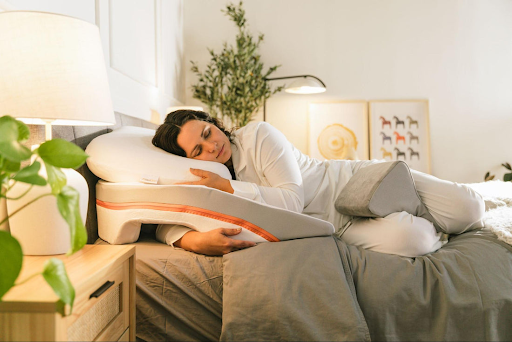
Do you wake up tired? Does your partner nudge you at 2 a.m. because you’re snoring again? You may have tried nose strips, side sleeping, or even mouth tape. Still snoring? There’s a simple thing you can try next: a pillow for snoring.
These pillows support your head and neck so your airway stays more open. That can mean less snoring and better sleep for you and your partner.
This easy guide explains what anti‑snore pillows are, how they work, the different types, and how to choose one that fits you.
What Is an Anti‑Snore Pillow?
An anti‑snore pillow is a pillow made to reduce snoring. It does this by helping your head, neck, and airway line up while you sleep. Good position matters, not just softness. Snoring happens when air cannot move smoothly through your throat. Your tongue and soft tissues can fall back, especially when you lie on your back. A pillow for snoring helps keep you in a better position, often on your side, so your airway stays more open. Less blockage means less snoring.
How Do Anti‑Snore Pillows Work?
Different pillows work in different ways. But most use a few simple ideas.
1) Lift Your Head
A small incline can stop your airway from collapsing. When your head is raised a little, air flows more easily. Wedge pillows and some contour pillows do this well.
2) Stay on Your Side
Snoring is often worse on your back. Many anti‑snore pillows are shaped to make side sleeping easier. This keeps your tongue and soft tissues from falling back into your throat.
3) Keep Your Neck in Line
When your neck and spine are lined up, your airway is more stable. Support matters. A pillow for snoring cradles your neck so you can breathe and sleep better.
4) Avoid Back Sleeping
Some pillows use shapes or wedges that make back sleeping uncomfortable. This can help people who snore only or mostly on their backs.
5) Bonus: Help With Acid Reflux
If you get acid reflux at night, a slight lift can help. A wedge pillow can reduce reflux and may also cut down on snoring.
Bottom line: Everyone is different. The best pillow for snoring for your friend may not be the best for you. Learn how each pillow works, then pick the one that matches your sleep habits.
Types of Anti‑Snore Pillows: Pros & Cons
Memory Foam Contour
- How it works: Curves to support the head and neck.
- Best for: Side sleepers and some back sleepers.
- Watch out: Can sleep hot. Choose ventilated foam or a cooling cover.
Wedge Pillow
- How it works: Lifts your upper body to keep the airway open.
- Best for: Back sleepers and people with nighttime reflux.
- Watch out: Bulky. Not great for travel.
Adjustable Pillows
- How it works: Add or remove inserts or fill to change height and feel.
- Best for: People who need a custom fit or switch positions.
- Watch out: It often costs more. Takes a little time to dial in.
Positional/Side‑Sleep Training Pillows
- How it works: Bolsters or contours nudge you to stay on your side.
- Best for: People who snore more on their backs.
- Watch out: It may take a few nights to get used to.
How to Choose the Best Pillow for Snoring
1) Match Your Sleep Position
- Back sleepers: Try a wedge pillow or a medium‑loft contour pillow for a gentle lift.
- Side sleepers: Pick a contour memory foam pillow with the right height to keep your neck straight.
- Stomach sleepers: Use a very thin, soft pillow. If you still snore, look at other aids too.
2) Think About Material & Cooling
Pick breathable foam or a cooling cover if you sleep hot. If you have allergies, choose hypoallergenic and washable covers.
3) If You Travel
Look for a lighter pillow for snoring or a travel wedge. Keeping the same setup on trips can help you sleep better away from home.
4) Adjustability Helps
Removable inserts or shredded fill let you tune the height (loft) and firmness. If you move a lot at night, a balanced contour (same on both sides) can help.
5) Try It Risk‑Free
A trial period makes testing easy. Many brands offer 30 to 100 nights. Give your body a week or two to adjust.
Pro tip: Record a short sleep clip (or ask your partner). Compare your snoring before and after using your new pillow for snoring.
What Else Helps
A good pillow for snoring is a strong first step. These tips can boost results:
- Mandibular Advancement Device (MAD): A mouthpiece that moves your lower jaw forward to keep the airway open.
- Nasal help: Try a nasal dilator or external strip if a stuffy nose makes snoring worse.
- Sleep habits: Keep your room cool, avoid alcohol late at night, skip heavy meals before bed, and keep a steady sleep schedule.
- Weight & fitness: Even small weight loss can help some people.
- See a pro: If you have loud snoring, daytime sleepiness, morning headaches, or pauses in breathing, talk to a doctor. You may have sleep apnea, which needs medical care.