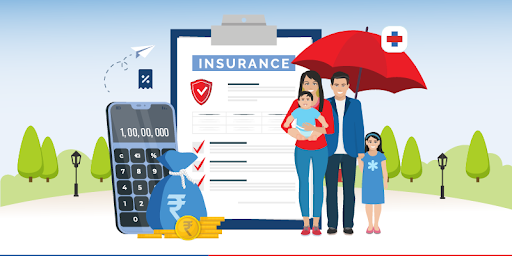
The financial protection requirements in India are quite clearly changing around the year 2025. The conditions of incomes, the financial objectives, and the future uncertainties have changed to such a degree that the previously standard life coverage amounts are no longer sufficient. In this setting, life insurance of 1 crore is coming up as a generally accepted standard for people desiring long-term financial stability.
On the other hand, a lot of policyholders are re-evaluating their payment methods for LIC Premium Payment and making changes in the frequency and structure of payments that are more in line with their cash flow requirements. These two trends are interlinked as they show a larger shift in the attitudes of families towards life insurance in the face of an uncertain economy.
Higher financial responsibilities demand higher protection
In the last ten years, average Indian family has to handle much more financial obligations than before and these have taken the form of education, medical and lifestyle expenses. Moreover, the majority of Indian families, at that time, considered a sum assured of around ten to twenty lakhs as sufficient life cover. By the year 2025, even that amount will hardly be able to cater for the essentials of the future.
Now, one crore term insurance is gradually gaining acceptance as the least amount that one must take up. Basically, it comes with a benefit that caters to the financial demands of the modern family. To the family of the deceased breadwinner, such insurance would be the most helpful in maintaining their lifestyle, settling major debts, and supporting daily expenses for many years to come.
Inflation awareness is driving higher sum assured decisions
The enhancement of financial literacy results in individuals and more people using future inflation-adjusted costs instead of current expenses to calculate their life cover. Education, healthcare, and housing are the three areas where inflation often outpaces general expenses. This scenario has made a lot of working professionals believe that a crore might not be sufficient to protect their families in the long run.
The customary rule of securing coverage of ten to fifteen times one’s yearly income still leads many towards crore-level protection. This figure guarantees that the dependents will have both sufficient time and resources to go through the process of regaining financial stability.
Improved income structures support larger coverage
The year 2025 will witness a major trend in the increase of structured and stable incomes in different industries. A considerable number of workers get now regular and predictable increases in their salaries, along with bonuses and rewards based on their performance. Such modifications allow a person to easily incorporate long-term commitments like insurance premium payments into his or her budget.
With income certainty improving, buying 1 crore term insurance has started to seem more practical compared to a few years back. The young professionals, especially in cities where the living cost is high, are the ones who mostly choose to take out a large sum assured right at the beginning of their careers when the premiums are still low and easy to afford.
Changing attitudes towards financial preparedness
Family attitudes toward financial protection have changed due to the events of the past few years. Families are now more conscious of the fact that surprising incidents can break their income and financial plans for many years. The idea of insurance has also grown stronger; it is now looked at as an indispensable part of risk management rather than a mere formality.
A crore-level cover gives families peace of mind that their basic financial obligations will not be affected. This reason more than any other makes the case for high coverage the strongest.
How LIC premium payment behaviours are changing in 2026
Alongside the mentioned increase in demand for coverage, another trend that is being observed is the change in LIC premium payment patterns. Step by step, policyholders are getting rid of the previous mentality of just paying premiums without any planning. However, they are now synchronizing their premium payments with their income cycles and financial priorities.
Three payment pattern changes stand out in 2026:
1. Preference for annual and semi-annual payments
In the past, convenience was the primary reason for selecting monthly premiums, but now people tend to see the annual or semi-annual schedules as more efficient. By paying the premiums at a lesser frequency, the individual getting the insurance can handle the finances better and in case of certain conditions, they may be able to save on the charges as well.
2. Alignment of premium cycles with major income inflows
Those who receive a salary often coincide their premium payments with the times they receive bonuses or the months when their spending is less. This allows a larger coverage like a 1 crore term insurance to be incorporated without affecting the monthly budget.
3. Increase in digital and automated payments
The advent of digital platforms has not only made it easy to keep track of due dates but also to manage reminders and therefore timely renewals. Consequently, more and more policyholders are willing to opt for high-value long-term policies since the payment process has become less complicated and more transparent.
Connection between higher coverage and updated payment patterns
One of the factors that facilitate crores-level plans is the better flexibility regarding premium structures. If the insured can select the payment plan that is most compatible with his or her money management habits, then a higher sum assured will be easier to handle.
For instance, an insured person may consider annual payments to be more predictable and within the budget if they are matched to his or her income peaks. People may still keep monthly premiums but will set digital alerts to make sure their payments are regular. These changing LIC premium payment patterns indirectly help to the increasing acceptance of high-value term plans.
Evolving family structures also influence the trend
Widespread family arrangements—like dual-income couples, single-parent households, and families taking care of senior parents—usually come with different financial strains. The coverage of a crore level provides a reliable safety net that fits these various requirements. Families are more and more aware of the necessity of massive protection, whether it is the expense of raising children, taking care of the elderly or clearing long-term debts.
Conclusion
In 2026, 1 crore term insurance is becoming a new standard because it better reflects the financial realities of modern Indian households. Rising expenses, greater awareness of inflation, improved income stability, and evolving risk perceptions all contribute to this shift. At the same time, changing LIC premium payment patterns—driven by digital convenience, budget-conscious planning, and flexible payment choices—make higher coverage easier to manage. Together, these developments indicate a more informed and future-ready approach to life insurance among Indian policyholders.