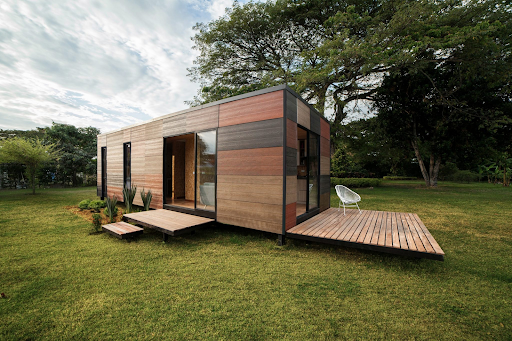
If you have ever watched a construction site drag on for months, with the noise, the dust, and the endless delays, you already understand why so many people across India are turning to prefabricated cabin construction. This method builds most of the structure off-site in a controlled factory environment, then assembles it at the final location in a fraction of the time. The result is faster, cleaner, and far more affordable than brick-and-mortar construction.
Today, with the rise of experienced portable cabin manufacturers offering customised solutions, getting a quality structure built no longer means months of waiting and budget overruns. This approach is also widely used for prefab homes, commercial spaces, and rooftop extensions across modern construction projects.
Key Advantages Of Prefabricated Construction
Prefabricated construction solves many of the common problems seen in traditional building methods. Since steel is the primary material used, the structure is strong, corrosion-resistant, and capable of handling vibration and movement better than wood.
Steel prefabs are also easy to maintain and modify when space requirements change, whether that means adjusting interior layouts or expanding the structure. This flexibility makes them a practical long-term solution.
Another important advantage is sustainability. Because components are manufactured in a controlled factory environment, material wastage is minimal. In addition, steel is recyclable, which reduces construction waste and supports more eco-friendly building practices.
Types Of Prefabricated Cabins And Their Uses
The Indian market has evolved significantly, and today, buyers can choose from several types based on their specific needs.
- Container Porta Cabin
Built using a steel frame structure inspired by the durability of shipping containers, it delivers exceptional strength, weather resistance, and a neat modular appearance. These are a popular choice for site offices, portable showrooms, and storage units because they stack easily, transport without damage, and require minimal foundation work.
- PUF Panel Cabins
Made with Polyurethane Foam panels that function as sandwiched metallic boards forming the walls and roof, these keep the interior cool in Indian summers and warm during cold northern winters. Prefab spaces built with PUF panels can be up to eight times lighter than traditional brick and gypsum walls, which makes installation and relocation genuinely straightforward.
- Portable Office Cabins
Designed for quick deployment at corporate sites or project locations, these offer a fully functional workspace with proper insulation, ventilation, and modern finishes without the time and cost of permanent construction.
- Prefabricated Labour Quarters
Built to house large workforces on active project sites, these structures are durable, easy to expand, and can be dismantled and relocated once the project wraps up.
- Luxury Porta Cabins
Fitted with quality interiors, insulation, and contemporary finishes, these go well beyond the basic cabin and serve as compact yet comfortable living or working spaces across varied settings.
These prefabricated cabin solutions are commonly used alongside larger prefab developments such as modular homes, site offices, and commercial prefab structures.
How Prefabricated Cabins Are Built
The process follows a clean sequence. Components are fabricated at a factory under strict quality checks, transported to the site with far less heavy machinery than conventional construction requires, and then assembled on-site typically within days rather than months. Shorter timelines mean lower overall costs and earlier occupancy.
Safety is another real advantage. Because the bulk of the work happens in a factory environment, workers face fewer risks from on-site hazards, inconsistent weather, and moisture-related issues.
Why LGSF Structures Are The Future Of Prefab In India
The most advanced evolution in prefabricated construction today is the LGSF structure, which stands for Light Gauge Steel Frame construction. It replaces traditional wood or heavy steel framing with thin galvanised steel members that are earthquake-resistant, termite-proof, moisture-resistant, and fully reusable.
An LGSF structure exerts minimal load on foundations, reduces construction timelines dramatically, and carries a far lower ecological footprint than conventional builds. It also delivers effective sound and heat insulation for a comfortable living experience, requires less power, and can easily withstand heavy loads.
LGSF systems are widely used in prefab homes, portable cabins, and commercial modular buildings because of their durability and efficiency.
For residential, commercial, and industrial applications alike, it represents the smartest long-term investment in Indian construction today.
Conclusion
Prefabricated cabin construction has clearly moved beyond being a temporary fix. From container porta cabins and PUF panel structures to luxury porta cabins and portable office cabins, the options today address a wide range of needs across India. Faster timelines, stronger materials, lower costs, and the growing adoption of LGSF structures make prefab the smarter choice over conventional construction.
Manufacturing companies like Solvabuild bring over a decade of expertise in delivering innovative, sustainable, and fully customised prefab solutions, including portable cabins, LGSF structures, steel prefabs, and PUF panel systems. The company also develops prefab homes, modular commercial spaces, and rooftop extensions designed for modern construction needs.
If you are ready to build smarter, Solvabuild is where your project begins.