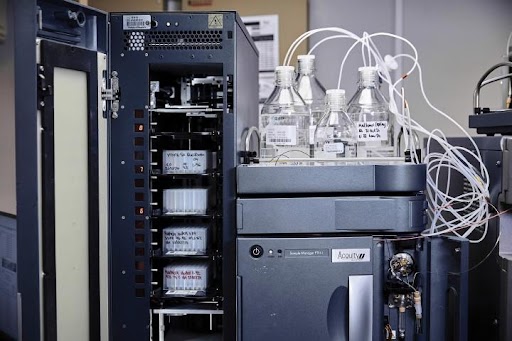
Cancer drug development has a measurement problem. Researchers are no longer asking only whether a therapy shrinks a tumor. They need to know how much drug reached the bloodstream, how fast the body cleared it, whether active metabolites formed, and how biomarker levels changed during treatment. That is where LCMS bioanalysis has become central to oncology research.
In modern oncology programs, lcms mass spectrometry supports two high-value jobs at once. First, it quantifies anticancer drugs and metabolites in plasma, serum, tissue, or other biological matrices. Second, it helps measure cancer biomarkers linked to response, resistance, toxicity, and patient selection. For teams working in translational oncology, biomarker testing, and clinical pharmacology, lcms bioanalysis is no longer a support function. It is part of the decision engine.
Why LCMS bioanalysis matters in oncology
Oncology pipelines are full of complex therapies. Small molecules, antibody-drug conjugates, kinase inhibitors, PARP inhibitors, and combination regimens all create bioanalytical demands that older single-analyte workflows struggle to meet. Researchers need sensitivity in the low ng/mL or pg/mL range, selectivity in dirty biological matrices, and reproducibility across long clinical studies. LCMS Bioanalysis is built for that job.
A typical oncology bioanalytical workflow uses lc ms ms analysis to quantify:
- Parent drug concentration over time
- Active and inactive metabolites
- Exposure-response biomarkers
- Pharmacokinetic and pharmacodynamic markers
- Safety markers linked to organ toxicity or off-target effects
This matters because dose selection in oncology is no longer based only on maximum tolerated dose. Many programs now rely on exposure, target engagement, and biomarker movement to refine dose and schedule decisions. Regulators also expect validated methods, robust calibration, and documented sample stability for pivotal studies. FDA and ICH M10 guidance both reinforce that point.
Where LC-MS/MS fits in cancer biomarker testing
Cancer biomarker testing often brings one major challenge: heterogeneity. Tumors evolve, treatment changes biomarker expression, and a single tissue biopsy may miss the full picture. Liquid biopsy approaches help by using blood or other fluids to track molecular changes over time. The National Cancer Institute defines liquid biopsy as analysis of blood, urine, or other body fluids for tumor cells or tumor-derived material, which makes serial testing possible during treatment.
In practice, lcms mass spectrometry supports biomarker work in several ways:
1) Quantifying drug exposure and correlating it with response
If a kinase inhibitor shows inconsistent efficacy across patients, researchers often ask whether exposure differs by metabolism, adherence, food effect, or drug-drug interactions. A validated mass spectrometry assay gives a precise concentration-time profile. Teams can then compare exposure with tumor response, adverse events, or resistance markers.
2) Measuring small-molecule biomarkers and metabolic signatures
Many cancer-related biomarkers are not proteins. They are lipids, metabolites, steroid hormones, nucleosides, or pathway intermediates. These are often better suited to lc ms ms analysis than immunoassays because mass spectrometry offers high specificity and multiplexing potential.
3) Supporting translational studies in early drug development
In phase 1 oncology studies, translational teams often need to connect preclinical findings with first-in-human data. That means analyzing plasma drug levels, tumor penetration, metabolite formation, and biomarker changes from limited sample volumes. A strong lcms sample workflow helps preserve data quality when sample volume is tight and matrix complexity is high.
Must Read: Mass Spectrometry Service Applications in Drug Development Studies
The role of LCMS bioanalysis across the oncology drug development cycle
Discovery and preclinical screening
During discovery, lcms bioanalysis helps screen lead compounds for absorption, distribution, metabolism, and excretion behavior. Researchers use mass spectrometry assay methods to assess exposure in animal plasma, identify metabolites, and understand tissue distribution. If a candidate fails to reach therapeutic levels or produces problematic metabolites, teams know early.
First-in-human and dose escalation studies
In phase 1 oncology trials, dose escalation depends on more than safety alone. Sponsors want pharmacokinetic clarity. Is exposure proportional to dose? Is accumulation occurring? Are metabolites clinically relevant? A validated lc ms ms analysis method answers those questions with a data trail regulators trust.
I’ve seen this become a bottleneck in real programs. A study team may have strong preclinical efficacy data, but if the bioanalytical method is unstable in plasma or recovery drops across runs, the PK story falls apart. Rework delays everything, from interim analysis to dose-expansion decisions. In oncology, where timelines are tight and patient samples are precious, assay robustness is not a technical detail. It shapes the development path.
Biomarker-led patient stratification
Precision oncology depends on identifying which patients are most likely to respond. Some biomarkers are genomic, but many response or resistance signals sit in the metabolome or downstream pathway chemistry. Here, lcms mass spectrometry complements genomic testing by measuring what the tumor biology is doing in real time, not only what mutations are present.
Late-stage development and regulatory submission
As programs move toward registration, bioanalytical expectations tighten. The method must demonstrate accuracy, precision, selectivity, recovery, matrix effect control, carryover limits, dilution integrity, and sample stability. ICH M10 and FDA guidance set the baseline for validated drug quantification methods, while biomarker assays need fit-for-purpose validation depending on their intended use.
What makes a strong oncology LCMS workflow
A good oncology lcms bioanalysis program usually rests on five pillars:
1) Fit-for-purpose method development
The assay design must match the research question. A discovery-stage exploratory biomarker method does not need the same validation depth as a pivotal clinical PK assay, but both need a clear performance standard.
2) Smart sample preparation
Cancer studies often involve plasma, serum, tumor homogenate, cerebrospinal fluid, or dried blood spots. Each matrix behaves differently. Protein precipitation, liquid-liquid extraction, and solid-phase extraction each affect recovery and matrix effect. Poor sample prep is one of the fastest ways to compromise an lcms sample set.
3) Internal standards and matrix control
Stable isotope-labeled internal standards are often essential for controlling ion suppression and extraction variability. In oncology matrices, where endogenous interference is common, this is one of the biggest levers for assay reliability.
4) Stability and chain-of-custody discipline
Drug candidates, metabolites, and biomarkers degrade. Freeze-thaw stability, bench-top stability, autosampler stability, and long-term storage data matter. One weak link in sample handling can distort exposure-response conclusions.
5) Experienced mass spec support
Many oncology sponsors lean on a specialist Mass Spec Service partner when in-house capacity is limited. That is often a smart move for complex panels, rare matrices, or global trials where turnaround and documentation standards are strict.
Challenges unique to oncology bioanalysis
Oncology bioanalysis is rarely straightforward. Common pain points include:
- Low sample volume from heavily monitored patients
- Concomitant medications that complicate interpretation
- Narrow therapeutic windows
- Active metabolites with their own pharmacology
- Biomarker drift across treatment cycles
- High matrix complexity in diseased populations
This is why lcms bioanalysis works best when bioanalytical scientists, clinicians, translational researchers, and statisticians collaborate early. The assay should not be built in isolation from the study design.
Final takeaway
In oncology research, better measurement leads to better decisions. LCMS bioanalysis gives drug developers a practical way to connect dose, exposure, biomarker movement, and patient outcome across the development cycle. Whether the goal is validating a mass spectrometry assay, improving lc ms ms analysis for a targeted therapy, or building a biomarker-driven clinical program, the value is the same: cleaner data, faster interpretation, and stronger confidence in the next development step.