Walk into any showroom that specialises in natural floor coverings and you will see samples that look, at first glance, remarkably similar: warm, earthy, textured weaves in shades of straw, oatmeal and wheat. Yet the fibres behind those samples come from very different plants, are grown in very different environments and behave in very different ways once they are on your floor. Of all of them, seagrass carpet is perhaps the most misunderstood, partly because it is so often grouped with sisal as if the two were interchangeable.
They are not. Seagrass has a distinctive set of strengths that make it the best natural fibre for some rooms and a poor fit for others. This article puts seagrass carpet in context alongside the other main members of the natural fibre family, so you can judge which one genuinely suits the space you are planning.
What Seagrass Actually Is
Despite the name, the seagrass used for flooring is not harvested from the ocean floor. It is a grass-like sedge cultivated in flooded fields, somewhat like rice paddies, mostly in China and parts of Southeast Asia. The fields are periodically flooded with water, which contributes to the character of the plant’s stems.
At harvest, the stems are cut, dried and then spun into a strong, smooth, rope-like strand. Rather than being broken down into fine fibres and spun into a soft yarn, seagrass largely retains the integrity of the stem itself. This is why seagrass weaves often look like miniature basketry, with each strand clearly visible.
The most important property of seagrass is its smooth, almost waxy outer surface. That surface is relatively non-porous, so liquids tend to sit on top rather than soak in immediately. It also means the fibre resists dye, so seagrass is almost always sold in its natural colours.
The Defining Characteristics of Seagrass Carpet
Natural stain resistance
Compared with sisal and jute, seagrass carpet is considerably more forgiving of everyday spills. Because liquid does not wick quickly into the strand, there is usually time to blot it away before it leaves a mark. This does not make seagrass waterproof, and prolonged moisture can still cause problems, but it explains why seagrass is often recommended for dining areas and family rooms where sisal would be risky.
Colour that changes over time
New seagrass often has a greenish or khaki tinge when first laid. Over the following weeks and months, exposure to light softens this towards warm wheat and straw tones. Some people love this evolution; others are surprised by it. Seeing an aged sample alongside a new one is the best way to set expectations. A new seagrass floor may also carry a faint, pleasant hay-like scent that fades as it settles in.
Texture and feel
Seagrass feels smooth and cool underfoot, with a slightly ridged surface determined by the weave. It is firmer and less yielding than wool or jute, but many people find it more comfortable barefoot than coarser fibres such as coir. Because the surface is so smooth, it can feel slippery in some situations, which is why many installers are cautious about seagrass on stairs.
Durability
Seagrass strands are tough and resist crushing. The fibre’s smooth surface also sheds dirt fairly easily, so it vacuums well. Its main durability limitations relate to weave and installation rather than the fibre itself. Larger basketweave patterns can catch claws or furniture legs, and the stiffness of the strands requires a skilled installer to achieve clean seams and edges.
How Seagrass Compares With Its Natural Fibre Relatives
Seagrass versus sisal
Sisal, made from the leaf fibres of the agave plant, is more absorbent than seagrass. That absorbency allows sisal to be dyed in a wide range of colours and gives it a softer, more refined visual texture, but it also makes sisal more prone to water marks and staining. Sisal generally offers more weave options and a more tailored appearance, which is why designers often specify it for formal living rooms, offices and contemporary interiors.
Seagrass, by contrast, offers better spill tolerance and a more casual, organic look, but a narrower colour palette. If you want charcoal, grey or blue, sisal is the realistic natural option. If you want something that copes with a family dining area, seagrass is usually the safer bet.
Seagrass versus jute
Jute is the softest fibre in the group. Produced from the stalks of the jute plant, mostly grown in India and Bangladesh, it has a gentle, almost wool-like hand and a warm golden-brown colour. That softness comes at a cost: jute is the least durable of the common natural fibres, tends to shed, and is particularly sensitive to moisture and staining.
Where seagrass is tough and smooth, jute is soft and comfortable. Jute suits low-traffic bedrooms, sitting rooms and rugs where comfort matters more than heavy wear. Seagrass suits busier rooms where practicality matters more.
Seagrass versus coir
Coir is made from the husk fibre of coconuts. It is the coarsest and most rugged of the natural fibres, with a bristly texture that excels at scraping grit off shoes. That makes coir the classic doormat fibre. As a floor covering it is very hard-wearing but quite rough barefoot, and it can shed short fibres, especially when new.
Compared with coir, seagrass is noticeably smoother and more comfortable, and it presents a more refined appearance for living areas.
Seagrass versus abaca and wool blends
Abaca, sometimes called Manila hemp, comes from a relative of the banana plant and has a natural lustre and silky strength. It is less common and tends to sit at a higher price point. Wool and sisal blends combine the visual texture of sisal with the softness and resilience of wool, bridging the gap between natural fibre texture and carpet comfort.
These options are worth knowing about, but for most households the decision comes down to sisal, seagrass, jute or a wool blend.
Matching the Fibre to the Room
Rather than asking which natural fibre is best overall, it is more useful to ask which fibre is best for a particular room and household.
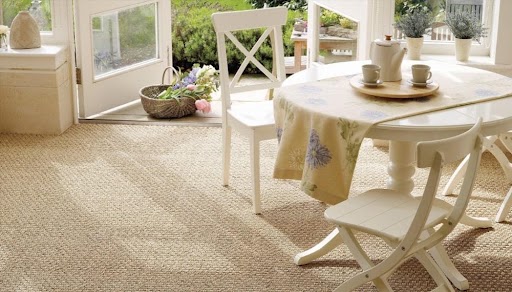
Dining rooms and family living areas. Seagrass carpet is often the most practical choice here thanks to its spill tolerance and toughness. A dining table with chairs that slide in and out daily suits a tight seagrass weave better than a loose, soft jute.
Formal lounges and studies. Sisal tends to win in spaces where a refined finish and wider colour choice matter, and spills are less likely.
Bedrooms. Jute and wool blends are comfortable underfoot in rooms where people walk barefoot. Seagrass works too, but feels firmer.
Entry zones. Coir is the specialist for door mats and areas that need to trap grit. For hallways that run off an entry, a tight seagrass or sisal weave can work well, provided outdoor moisture is controlled with good mats.
Stairs. Sisal in a tight weave is generally preferred over seagrass on stairs because seagrass can feel slippery and its stiff strands are harder to wrap neatly around nosings. Whichever fibre you consider, get professional advice before committing.
Common Myths About Seagrass Carpet
- “Seagrass is harvested from the sea.” It is cultivated in flooded fields, not dredged from marine habitats.
- “Seagrass can be any colour you like.” Its smooth surface resists dye, so the palette is largely natural. Some products achieve variation by combining strands of naturally different tones or by pairing seagrass with coloured borders on rugs.
- “Seagrass is completely stain-proof.” It is stain-resistant, not stain-proof. Oils, red wine and pet accidents still need prompt attention.
- “All natural fibres are rough.” Seagrass is among the smoother options, and jute is genuinely soft. Coir is the rough one.
- Caring for Seagrass Carpet
- Seagrass is among the easiest natural fibres to maintain. Regular vacuuming removes surface dirt quickly because grit does not lodge deeply in the smooth strands. For spills, blot immediately with a clean, dry cloth. Small marks can often be treated with a barely damp cloth, followed by thorough drying. Avoid soaking the carpet, steam cleaning or using strong chemicals. For larger cleaning jobs, use a professional who has experience with natural fibre floor coverings.
- Furniture cups under heavy pieces help prevent indentation in the weave, and rotating rugs every few months evens out wear and light exposure.
Practical Considerations Before You Buy
- Before choosing seagrass carpet, it is worth considering a few practical points:
- Ask to see an aged sample, or leave a new sample in a sunny spot for a few weeks to see how the colour shifts.
- Check how the product is backed and whether it is suitable for wall-to-wall installation or better as a bound rug.
- Think about your household: seagrass is forgiving for families, but chunky weaves may not suit cats that like to scratch.
- Consider underfoot comfort. If you want more softness, a seagrass base with a wool or jute rug layered on top is a popular approach.
Conclusion
Seagrass carpet occupies a practical middle ground in the natural fibre family. It is tougher and more spill-tolerant than sisal or jute, smoother and more comfortable than coir, and it brings an organic, relaxed character to a room. Its main trade-offs are a limited colour palette, an initial greenish tone that mellows over time and a smooth surface that makes it less ideal for stairs.
The best approach is to stop thinking of natural fibres as one category and start matching specific fibres to specific rooms. Seagrass is often the right answer for the busiest, most lived-in parts of a home, while sisal, jute and wool blends can take care of the spaces where finish, colour or softness matter more.
For those comparing options in Victoria, Floorspace is a Melbourne natural fibre flooring specialist whose range of seagrass floor coverings can be viewed alongside sisal, jute and coir, which makes it easier for homeowners across Melbourne and surrounding suburbs to compare the fibres side by side.