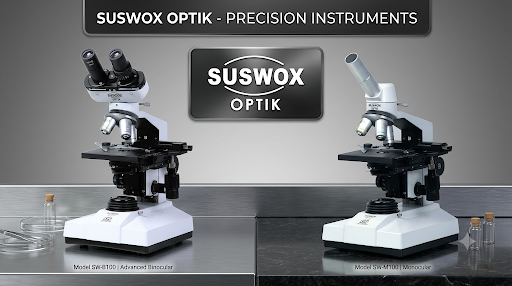
There was a time when precision optics was considered the exclusive territory of a handful of countries. That picture has changed. Indian builders now ship instruments to laboratories, universities, and industries across many continents, competing on quality and value rather than price alone. The rise of the country’s optics sector is one of the quieter success stories in modern manufacturing.
The shift began with a focus on genuine engineering rather than assembly. As companies invested in optical grinding, coating, and precise mechanical work, their instruments began to match imported units in clarity and durability. Today a well-run microscope supplier and exporter india can meet the demanding standards of overseas research institutions, which is no small achievement in a field where tolerances are measured in fractions of a wavelength of light.
Value is a powerful driver of this growth. Buyers abroad quickly discovered that Indian instruments deliver comparable optical performance at a more sensible price, without the inflated margins attached to some legacy brands. For universities and public health systems working within tight budgets, that combination of quality and affordability is compelling, and it has opened doors in markets that once bought only from traditional sources.
Adaptability has helped too. Indian builders are often willing to tailor instruments to specific requirements, adjusting illumination, stage design, or accessory bundles to suit a customer’s discipline. This flexibility contrasts with the rigid, fixed catalogues of some larger firms, and it appeals to buyers who need equipment matched precisely to their work.
Reliability under tough conditions is another selling point. Instruments designed for humid, dusty, high-use Indian environments tend to perform robustly wherever they are sent. When an microscope supplier and exporter india builds for demanding domestic conditions first, the resulting durability travels well, reassuring overseas buyers who need equipment that keeps working far from the factory.
Service capability has matured alongside product quality. Leading firms now offer clear warranties, responsive technical support, and networks that help distributors handle maintenance abroad. Export success is not only about shipping a good instrument; it is about standing behind it, and the companies growing fastest are those that treat overseas customers as long-term partners.
The product range on offer has broadened as well. Exporters ship upright biological microscopes for teaching and diagnostics, stereo zoom instruments for industry, inverted microscopes for cell research, and digital imaging systems for documentation and measurement. This breadth lets a single supplier serve an entire institution, simplifying procurement for buyers who prefer to standardise on one dependable source.
Recognition has followed performance. Instruments built in India now sit in respected laboratories and educational institutions in many countries, quietly doing precise work day after day. Each satisfied customer strengthens the reputation of the sector as a whole and makes the next export sale a little easier to win.
The trajectory points upward. As engineering deepens and digital features become standard, Indian optics is likely to claim a larger share of the global market. For buyers anywhere in the world, this means more choice, better value, and a serious alternative to the established names. For the country’s manufacturers, it marks the arrival of a sector that has earned its place among the world’s trusted sources of scientific instruments.
Compliance with international standards has underpinned much of this progress. To sell into demanding markets, builders must meet recognised quality and safety benchmarks, and the effort of reaching those standards has lifted the whole sector. Instruments that satisfy strict overseas requirements are, unsurprisingly, excellent choices for domestic buyers too, who benefit from the same rigour.
Partnerships with distributors abroad have accelerated growth. By working with local representatives who understand their own markets, Indian builders reach customers they could never serve directly and ensure that support is available on the ground. These networks turn a single export sale into an ongoing presence in a foreign market.
The story is far from finished. As research budgets tighten worldwide and buyers look harder at value, instruments that combine strong optics with fair pricing are well placed to grow their share further. Indian optics has moved from imitation to genuine capability, and its reputation now rests on performance that speaks for itself in laboratories around the world.
Research collaboration has amplified the trend. As Indian scientists publish and partner internationally, colleagues abroad grow familiar with the instruments used in that work, and curiosity often turns into orders. Quiet, everyday performance in respected laboratories has proven a more persuasive advertisement than any marketing campaign could ever be.
For the buyer weighing options anywhere in the world, the practical message is simple: judge each instrument on its optics, its build, and the support behind it, and give serious weight to sources that deliver all three at fair value. Increasingly, that assessment leads to instruments built in India.
Currency dynamics have played a supporting role as well, making Indian instruments attractively priced in many overseas markets without forcing builders to cut corners. That favourable position, combined with steadily improving quality, gives exporters room to invest in better optics and stronger support rather than competing on price alone. It is a healthier basis for growth than a simple race to the bottom.