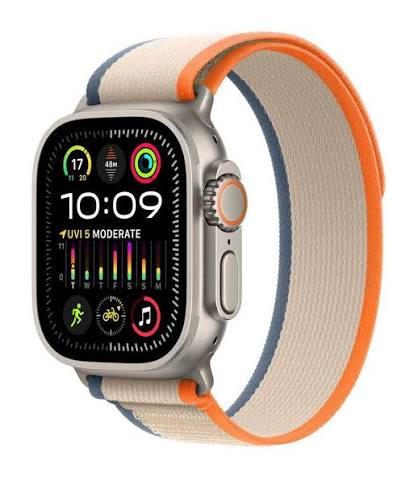
The consumer electronics landscape in the United Arab Emirates has evolved into one of the most dynamic and premium-centric retail sectors globally. Across major metropolitan economic zones like Dubai and Abu Dhabi, there is a distinct consumer preference for high-tier, multi-functional mobile accessories. Devices worn on the body are no longer viewed merely as digital extensions of a smartphone screen; instead, they are treated as standalone investments in personal telemetry, remote workflow management, and physical durability.
However, looking closer at the regional market reveals a massive spectrum of retail values. When browsing local storefronts, a consumer will quickly notice that a standard entry-tier wearable sits at a completely different financial tier compared to an elite, rugged sports model. Understanding the economics behind these products requires breaking down the core structural variables—such as material physics, complex cellular configurations, manufacturing pipelines, and localized features—that establish the final marketplace value of a modern samsung galaxy watch smart watch price in uae.
The Cost of Premium Metallurgy and Screen Science
The most immediate factor driving the price separation between baseline models and extreme-tier iterations is the physical bill of materials. Standard wearable variants are generally built using high-strength aluminum frames. While aluminum is incredibly lightweight and cost-effective to machine at scale, it remains prone to structural deformation and surface scuffing when subjected to intense physical impacts.
In contrast, high-end flagship iterations, such as the architecture seen in the samsung watch ultra 2, completely overhaul the structural framework by shifting to aerospace-grade titanium casings:
- Titanium Structural Frames: Sourcing and machining Grade 4 Titanium involves rigorous manufacturing protocols, including specialized diamond-tipped CNC cutting heads and high-temperature vacuum casting, which significantly elevate raw production costs.
- Sapphire Crystal Overlays: Standard glass alternatives are replaced with deep-set sapphire crystal sheets grown in specialized laboratories. This material offers an incredibly dense molecular structure that matches the scratch-resistance thresholds of industrial tools
- Display Output Matrices: Higher-priced units feature advanced AMOLED matrices calibrated to push peak illumination thresholds past 3,000 nits, ensuring complete outdoor visibility even under the harsh glare of the midday desert sun.
These advanced physical properties are balanced by complex internal engineering designed to meet structural resilience standards like 10 ATM pressure depths and military-grade environmental certification. When a buyer explores premium pricing models across the country, a major percentage of that initial financial allocation directly funds the high manufacturing and material overhead needed to survive extreme physical environments.
Connectivity Topologies: Bluetooth Independent Architecture vs. Standalone LTE Arrays
Beyond structural elements, the internal communication layout of a wearable heavily influences its final shelf price. Standard models are typically distributed in two primary electronic configurations: Bluetooth-only variants and standalone Long-Term Evolution (LTE) cellular configurations.
A standard Bluetooth unit functions primarily as a companion device, relying entirely on a paired mobile device to send notifications, fetch location updates, and handle outbound communication pipelines. This layout keeps component complexity minimal and reduces hardware manufacturing costs.
Opting for an LTE-enabled configuration, however, requires integrating an embedded SIM (eSIM) microchip, specialized high-efficiency radio frequency transceivers, and complex multi-band internal antennas directly into the small watch body. This independent architecture allows the watch to maintain a continuous data link, make emergency calls, and stream content autonomously without needing a smartphone nearby. Building and certifying these autonomous network layers under local telecom regulatory frameworks adds an automatic premium to the final shelf price of any high-tier samsung smart watch.
Regional Logistics: Import Dynamics, Warranty Infrastructure, and UAE Localization
The retail price of a high-performance smartwatch isn’t decided solely at the factory. Once a device leaves production, it enters a highly regulated international supply network that dictates local shelf pricing across the UAE.
When checking a samsung galaxy watch smart watch price in uae, the total retail value includes localized elements like customs clearing fees, international air cargo logistics, and the standard five-percent value-added tax (VAT) applied across local retail spaces. Furthermore, authentic local distributions come with official software optimizations tailored specifically for the Middle East market. This includes out-of-the-box support for regional mobile network operators, optimized Arabic-English bilingual text input engines, and secure digital payment systems configured with major local banks.
Additionally, official local retail versions include long-term authorized warranty coverage and access to dedicated diagnostic repair networks in Dubai, Abu Dhabi, and Sharjah. This localized service network adds an essential layer of consumer security, ensuring that if a premium piece of tech ever encounters physical or software trouble, it can be repaired using authentic spare parts at certified facilities.
Evaluating the Performance-to-Cost Ratio Across the Wearable Spectrum
Ultimately, calculating the financial commitment required for a new premium wearable comes down to balancing individual feature requirements against real-world use cases. For users seeking an everyday office assistant to organize notifications, track basic exercise sessions, and manage daily step goals, a standard entry-level aluminum configuration provides incredible value for money. These mainstream models typically retail between AED 700 and AED 1,300 depending on the selected casing size and wireless connectivity profile.
For users who push their tech to the limits—such as endurance runners, alpine hikers, or marine hobbyists—the investment shift toward high-end versions like the titanium samsung watch ultra 2 becomes highly justifiable. These premium options generally step into the AED 2,000 to AED 2,500 range, explicitly reflecting the specialized engineering required to build them. By paying for ultra-durable titanium casings, long-lasting high-capacity batteries, multi-channel bio-sensor arrays, and standalone LTE connectivity, buyers are securing an independent, long-term wrist workstation built to perform reliably in any environment