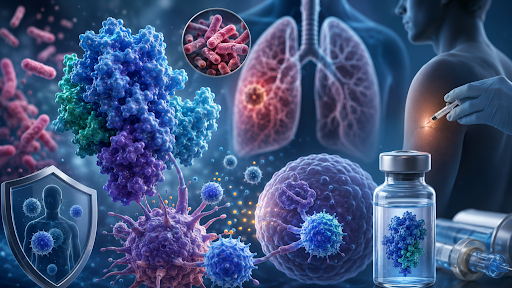
Tuberculosis (TB) is still one of the deadliest infectious diseases in the world. BCG has been the only available vaccine for TB for over a century. While it is very successful in children, it does not stop the disease in adults. This is why scientists constantly work to develop a better vaccine for TB.
Using specific pieces of the TB bacteria, called antigens, to train our immune system is the most promising strategy. A protein called ESAT-6 is one of the top targets. When scientists use genetic engineering to create ESAT-6, the resulting protein is known as the ESAT6 recombinant protein. This article explores why ESAT-6 is an effective target for vaccine design.
Why ESAT-6 is a Prime Vaccine Target
Choosing the right target is the most important step in the design of a new vaccine. If the target is too weak, the immune system will completely ignore it. If the target mutates too quickly, the vaccine becomes ineffective.
ESAT-6 meets all the critical requirements to serve as a target for a new tuberculosis vaccine.
High Immunogenicity
Immunogenicity describes how effective a protein is at triggering an immune response. Some components of TB bacteria can hide inside the cell or look too much like human tissue. As a result, the human body ignores them. However, TB bacteria secrete ESAT-6 during the early stages of infection to establish itself inside host cells. The human immune system is highly sensitive to ESAT-6 and immediately recognizes it as a foreign threat. Early detection of ESAT-6 signals the immune system to start to fight the infection before the bacteria can settle deep into the lungs.
T-Cell Activation
The human body cannot rely on antibodies alone to fight a TB infection. It requires a specialized type of white blood cell called T-cells, which are triggered by ESAT-6. T-cells begin to multiply and start releasing cytokines. These chemicals trigger macrophages and other immune cells to find and destroy TB bacteria.
Conserved Nature
Viruses or bacteria constantly mutate and change their shape to hide from medicine, which is the biggest problem with designing vaccines. However, ESAT-6 is highly conserved. Its genetic code for ESAT-6 stays almost exactly the same. Bacteria cannot easily mutate ESAT-6. It also relies heavily on ESAT-6 to escape human immune cells and survive. If the TB bacteria mutate ESAT-6, they will lose their ability to cause infection.
This is why a vaccine designed around ESAT-6 will work globally against almost all strains of TB.
The BCG Differentiation Advantage
The BCG vaccine was made by weakening a strain of cow tuberculosis. During that weakening process, the bacteria accidentally lost the specific chunk of DNA that creates the ESAT-6 protein. Therefore, the BCG vaccine does not contain ESAT-6. Those who have only received the BCG vaccine lack T-cells trained to recognize this specific protein.
This provides an advantage called Differentiating Infected from Vaccinated Animals/Humans. Right now, standard TB skin tests often give false-positive results for people who received the BCG vaccine as children.
Using a new vaccine built with recombinant ESAT-6, doctors can use specific blood tests to look only for ESAT-6 immunity. If a patient shows a reaction to ESAT-6, doctors know with high accuracy that the patient has been exposed to a true TB infection, rather than just reacting to their childhood BCG vaccine.
Strategies and Challenges in Vaccine Design
While ESAT-6 is an excellent target, turning a single bacterial protein into a fully functional, working vaccine requires overcoming several scientific hurdles. Researchers must choose the right delivery platform, add the necessary chemical helpers, and carefully balance safety with immune power.
Subunit Vaccine Platforms
Using whole, live TB bacteria can be risky and cause unwanted side effects. This is why modern scientists prefer to use subunit vaccines. They isolate a specific, harmless piece of the pathogen, which in this case is the recombinant ESAT-6 protein. This single protein, engineered in the lab, is injected into the body. The vaccine introduces the immune system to the dangerous “red flag” without exposing it to the actual living bacteria.
The vaccine does not contain the rest of the bacterial machinery. It is physically impossible for a subunit vaccine to cause a tuberculosis infection.
The Adjuvant Requirement
The recombinant ESAT-6 protein is so pure and isolated that the immune system often ignores it. Without the widespread cellular damage and inflammation that accompany a real bacterial infection, immune cells might treat the solitary protein as harmless debris and clear it away without creating any lasting memory.
This problem is fixed by including an adjuvant in the vaccine formulation. It is a chemical booster that intentionally causes controlled localized inflammation. In response, immune cells travel to that site and encounter the ESAT-6 protein. They recognize the threat and begin the process of building long-term T-cell memory.
The Cross-Over Challenge (Safety vs. Efficacy)
The key challenge in vaccine design is finding the perfect balance between safety and efficacy, a balance known as the therapeutic window. ESAT-6 is a highly active protein; scientists must handle it with caution.
If the vaccine dose is too high, or if the adjuvant is too aggressive, it might trigger an overactive immune response. This can lead to hyper-inflammation and tissue damage in the air sacs of the lungs.
If the vaccine is too weak, it will fail to generate enough strong, long-lasting T-cells to protect adults from a real, aggressive TB infection later in life.