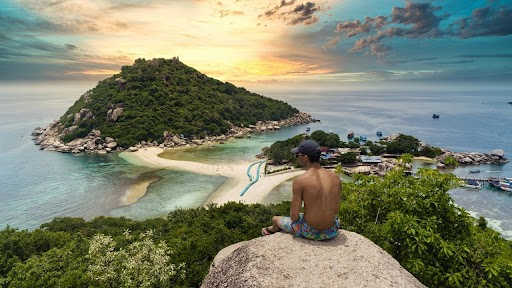
Koh Tao is a small island in the Gulf of Thailand that issues more scuba certifications annually than almost anywhere else in the world, second only to Cairns, Australia.
If you are planning to go scuba diving in Thailand, Koh Tao is where most people end up, and for reasons that go well beyond its reputation.
What Makes Koh Tao Different
The island covers just 21 square kilometres. You can cross it in under an hour. What it lacks in size, it compensates for in conditions.
Visibility in Koh Tao’s waters regularly reaches 20 to 30 metres, with water temperatures sitting around 29°C and roughly 300 days of sunshine annually. There are over 25 dive sites within a short boat ride of shore — coral-encrusted pinnacles, sandy slopes, a WWII-era shipwreck, and open water where whale sharks occasionally pass through.
The best diving conditions run from March through September, when seas are calm, and both visibility and marine life are at their peak. The monsoon season generally falls in October and November, with heavier rain and rougher seas. Diving continues year-round, and schools remain operational throughout the year.
What this combination produces — warm water, strong visibility, accessible sites, and a year-round diving calendar — is an environment where both beginners and experienced divers get genuinely good value from every session in the water.
The Dive Sites Worth Knowing About
Koh Tao’s range of sites means the island works whether you are completing your first open water course or planning fun dives as a certified diver.
The standout locations include Chumphon Pinnacle, with its granite towers covered in anemones and strong pelagic life, and Sail Rock, which offers the chance to encounter whale sharks. Stingrays and groupers patrol the depths, whilst schools of chevron barracuda and big-eyed trevally move in open water.
The HTMS Sattakut, a deliberately sunk naval vessel, adds a wreck dive to the mix — accessible to Advanced Open Water certified divers and one of the more distinctive dives in the Gulf of Thailand.
For a full breakdown of what you will encounter at each site and which ones suit your certification level, this guide to Koh Tao’s top dive sites is worth reading before you book.
Choosing a Diving Course Provider on Koh Tao
There are dozens of Koh Tao island diving centres to choose from. The variation in quality is significant, and the difference between a good provider and an average one shows most clearly in class sizes, instructor experience, and what actually happens in the water.
A few things worth checking before you commit:
- Instructor-to-student ratio. Small groups mean more time in the water and more individual feedback per session.
- Certification depth. Standard open water courses certify to 18 metres. Some providers go further.
- Course range. A school running everything from try dives through to Divemaster and Instructor training generally has a more established and experienced team.
Established centres on the island, such as La Bombona Diving, typically offer this full range, from beginner try dives through to instructor level. Use the criteria above to compare whoever you are considering before you book.
FAQ
When is the best time to dive in Koh Tao?
March through September offers the calmest seas and strongest visibility. October and November are the monsoon months. Conditions improve from December, though the prime window is the first half of the year.
Do I need experience to start a diving course?
No. Open water courses are designed for complete beginners. A try dive requires no prior experience at all — just a willingness to get in the water.
How long does an open water certification take?
Most courses take three and a half to four days, covering theory, a pool session, and four open water dives.
Is Koh Tao worth visiting as an already-certified diver?
As most centres offer daily fun dives across a rotating schedule of sites, the range from shallow reefs to deep pinnacles to a wreck gives certified divers plenty to work through.
What marine life can I expect to see?
Hawksbill turtles, blacktip reef sharks, barracuda, moray eels, blue-spotted stingrays, and a wide variety of reef fish are regular sightings. Whale sharks are possible, particularly around Sail Rock, though not guaranteed on any given dive. It is one more reason a diving course in Thailand’s Koh Tao rewards repeat visits as much as first ones.