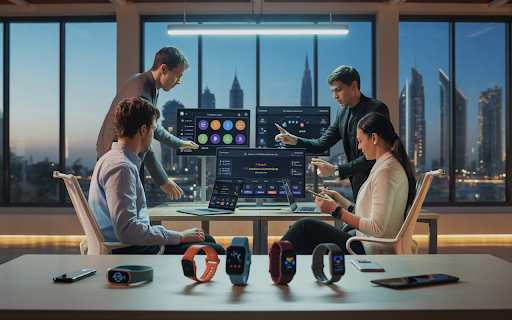
The Middle East is in the digital renaissance phase, and the UAE has been at the forefront of an enormous transformation of the way people live connected through the world. Dubai gets a lot of attention, but a silent yet strong revolution is taking place right next door. The tech talent is creating a niche in the cultural capital of the UAE that combines state-of-the-art hardware with hyper-local software requirements.
App Developers in Sharjah are no longer to focus on typical mobile-based applications but to specialize in complex wearable integration and HealthTech applications, just in time following the booming demand of lifestyle management applications in the region.
This is an explanation of how this specialization will transform the digital health environment in the Middle East.
The Emergence of the Networked Life in the UAE
The contemporary customer in the Middle East does not want a fixed mobile application any longer. They want an ecosystem. The population is hyper-connected with 97 percent penetration of smartphones in the UAE. This connectivity has logically been brought to the wrist with smartwatches and fitness trackers becoming widespread accessories, whether at the boardroom or at the gym.
This change has posed a new challenge, that is, hardware can be global, but the lifestyle is local. An ordinary fitness device may record the number of steps, but it will not consider the particular environmental, cultural, and dietary peculiarities of living in the Gulf. This is where regional expertise is important.
Why Sharjah is Becoming a Center of Specialized Devs
Sharjah has established itself as a sensible and innovation-driven city quietly as an alternative to the glitzy neighbors. A surge of technical expertise has been generated by the emphasis of the emirate on education (which houses University City) and the relatively lower cost of operation.
By capitalizing on such an environment, app developers in Sharjah are creating advanced back-end infrastructure that can process the massive data streams that wearables produce on a frequency basis. Not only simple e-commerce applications, but also wearable integrations demand:
- Low-latency data sync: Checking the heart rate on the phone in real time.
- Battery optimization: Writing code that does not run the device of the user in hours.
- Data Security: adherence to the rigid UAE health data laws.
Key Trends: Wearable Integrations
The present wave of development is not only a reflection of the phone notifications on the watch. It relates to the generation of glanceable experiences that are value-adding yet require no focus.
Biometric Synchronization
Apple HealthKit and Google Fit have custom APIs (Application Programming Interfaces) being built, enabling local apps to access raw information, such as Heart Rate Variability (HRV) and blood oxygen levels, provided by those applications. The given data is then input into local algorithms to give individual health insights.
Chronic Disease Management
As diabetes and cardiovascular problems are some of the most common health problems in the area, apps to connect with continuous glucose monitors (CGMs) and smart blood pressure cuffs are on the rise. These applications send real-time notifications to patients and their physicians in case vital signs leave safe zones.
Hyper-Local Context
The most successful apps are aware of the environment. As an example, in blazing summer days, intelligent integrations could notify their users about the need to hydrate depending on the real-time weather information, as well as the level of activity recorded by the wearable.
HealthTech and the Middle Eastern Pulse
The Silicon Valley copy-paste strategy does not apply to the Middle East HealthTech. The lifestyle applications in this case must observe and mirror the local culture. This is where the local wisdom of app developers in Sharjah is reflected.
- Algorithms ready for Ramadan: Fitness and nutrition apps are being coded to allow Ramadan Modes. Such capabilities automatically change the caloric intake guidelines, hydration notifications, and workout intensity guidelines to match the fasting time and prayer time.
- Culturally Relevant Nutrition: These apps can make health tracking realistic and sustainable to the population by including databases of local food, like calculating the macros of Harees or Machboos.
- Privacy-First Social Features: Social fitness challenges are gigantic; however, privacy is essential. Developers are building so-called private circles or gender-segregated leaderboards where users can compete with their friends and families without any interference with what information reaches them.
The Future is Predictive
These developers are currently working on the next frontier of prediction that is driven by AI. Not only are apps starting to provide preventative recommendations instead of just retrospective tracking by analyzing the historical data they have gathered with wearables, but also through this means. Think of an application that detects a decline in sleep quality within three days and recommends a certain meditation process or an earlier bedtime before you get the feeling that you are feeling completely drained.
Conclusion
The merging of techy wearables and culturally sensitive software is bringing about a golden age of digital health in the Middle East. The Emirates tech talent is creating solutions of world standards by catering to the particular requirements of the region, such as data sovereignty, cultural lifestyle tendencies, etc.
With the spike in the need to have personalized health technology, an application developer in Sharjah is demonstrating that they are not merely writing code for the current generation; they are designing the future of healthy living in the Middle East. For more information just contact our website TechGropse.