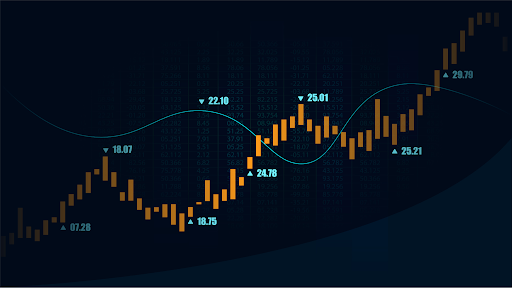
The domestic brokerage market in South Korea has developed considerable sophistication in serving the investment needs of a financially literate population, yet the instruments and markets available domestically have historically been constrained by a regulatory framework built around Korean-listed securities and conventional asset classes. The disconnect between what South Korean investors desire to access and what domestic brokers can practically provide has generated a structural need for alternative access options. CFD trading using internationally regulated platforms has become one of the most notable responses to that need. The instrument’s ability to provide exposure to international markets without the account setup and currency exchange logistics that direct cross-border investment requires has given it a certain utility to Korean investors whose market interests consistently extend beyond what domestic infrastructure can serve.
The appeal of accessing the dynamics of the US technology sector resonates especially strongly in a country whose professional and investment community closely tracks the fortunes of American technology firms, driven by both direct industry ties and the influence American technology firms exert on Korean semiconductors and electronics. A Korean investor interested in the performance of American chip designers, cloud infrastructure providers, or consumer technology companies faces a list of friction points that traditional cross-border investment channels incur, friction that CFD access substantially reduces. The ability to take positions on the price movements of those companies via a framework offered in Korean, quoted in won-equivalent terms, and operated through infrastructure familiar to local financial services users makes international equity exposure feel accessible rather than the preserve of only the most determined investors.
CFD-based commodity exposure fills a gap that domestic retail investment products in Korea have traditionally left open for investors with genuine commodity market views. A Korean investor who tracks lithium supply dynamics because of their implications for battery manufacturing, or who follows thermal coal markets because of their direct bearing on electricity generation costs in Korea, has had few practical means of expressing those views through domestic investment channels. The instrument enables that expression without the commodity-specific account relationships, futures market knowledge, and capital requirements that commodity derivatives typically demand, making it accessible to a generation of Korean investors whose market knowledge has frequently outpaced what domestic platforms were built to accommodate.
The FSS regulatory setting has influenced the interaction of South Korean retail investors in CFD trading in a manner that creates a domestic market experience unlike markets elsewhere in the region that are less regulated. Korean investors who focus on regulatory compliance report navigating a framework that imposes significant restrictions on accessing offshore CFDs while providing transparent criteria for assessing which international platforms fall within acceptable regulatory boundaries. That friction has generated a community orientation toward due diligence that views regulatory verification as a serious requirement rather than a formality, and broker selection discussions within Korean trading communities reflect that priority, unlike the spread and execution quality metrics that dominate similar discussions in communities less focused on compliance.
Platform localization plays a larger role in CFD adoption in Korea than discussions in internationally oriented trading communities tend to acknowledge. The presence of truly Korean-language interfaces, customer support personnel fluent in Korean, familiar with the regulatory and operational environment Korean customers navigate, and producing educational content tailored to Korean market conditions rather than translated versions of generic international material have created meaningful differentiation among brokers competing for Korean retail traders. Such platforms, which have invested in true Korean localization rather than superficial translation, report higher client retention among Korean customers, reflecting a market that actively values financial services that feel native rather than translated.
The expansion of CFD trading among South Korean investors reflects something central to the country’s investment culture: a persistent investment ambition that local infrastructure has been unable to satisfy. Korean investors whose analytical capabilities, capital, and market curiosity have outgrown local platforms are not simply seeking greater returns on riskier instruments. They seek fitting expressions of market views that their domestic investment environment cannot provide, and they pursue that goal with the regulatory acumen, risk discipline, and systematic preparation that characterizes South Korean financial participation at its most serious.