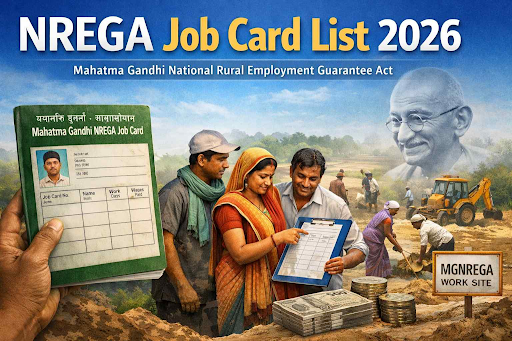
In a rapidly evolving economy, ensuring the financial stability and well-being of rural households remains a significant challenge. Recognizing this, the Indian government has introduced several initiatives aimed at empowering the rural population both socially and economically. Among these, the NREGA Job Card under the Mahatma Gandhi National Rural Employment Guarantee Act (MGNREGA) stands out as a critical tool in guaranteeing employment security and income generation for rural families. With its promise of up to 100 days of wage employment per year, the NREGA Job Card serves not only as evidence of entitlement to work but also as a gateway to several associated benefits.
What is the NREGA Job Card?
The NREGA Job Card is a document issued to households registered under the MGNREGA scheme. The primary purpose of this card is to provide rural households access to guaranteed wage employment in their locality. It lists the names of adult members in the household willing to work, allows them to apply for jobs under the scheme, and ensures transparency by documenting the wages earned.
The cardholder is entitled to demand work and receive fair compensation per the prescribed daily wage rates in the state. For instance, wage rates under the MGNREGA vary from state to state and are revised annually based on inflation. As of 2023, these rates range from ₹221 per day in states like Bihar to ₹315 per day in Goa.
Benefits of NREGA Job Card
1. Guarantee of Employment
The central benefit of the NREGA Job Card lies in the promise of 100 days of wage employment per financial year for rural households. If a registered worker is not provided employment within 15 days of requesting it under the guidelines, the family is entitled to unemployment allowance. This ensures a financial fallback for workers when no projects are readily available.
2. Income Generation
The wages earned through MGNREGA work contribute significantly to a household’s total income, especially during non-agricultural seasons or periods of economic distress. For instance, if a rural laborer in Maharashtra works for the full 100 days prescribed under the scheme, earning ₹286 per day, they would receive:
Income via NREGA: ₹286 × 100 days = ₹28,600 annually
This amount can help families cover essential expenses and improve their quality of life.
3. Skill Development
Under the scheme, workers are often engaged in tasks aimed at improving infrastructure in rural areas, such as constructing roads, ponds, wells, or other community projects. Participating in such activities not only fosters economic development but also allows workers to build skills that may be useful in other employment opportunities.
4. Transparency in Wage Transfers
Payments under MGNREGA are directly transferred to the worker’s registered bank account, minimizing the risk of corruption or wage theft. By doing this, the NREGA Job Card acts as a financial tool helping households enter formal banking channels.
5. Linkage to Other Government Schemes
The card also serves as a verification document to access other government schemes. The PM Kisan Samman Nidhi Yojana, which provides income support to farmers by depositing ₹6,000 per year in three installments into farmers’ accounts, is one such scheme. Similarly, other benefits such as rural housing, subsidies, and pension schemes can often be linked to the card as an identification tool.
PM Kisan Samman Nidhi Yojana and Its Relation to NREGA Job Card
The PM Kisan Samman Nidhi Yojana is another flagship program aimed at alleviating rural distress, focusing primarily on small and marginal farmers. While NREGA directly provides wage employment to rural families, PM Kisan offers indirect financial assistance by transferring ₹2,000 three times a year to eligible farmers. For households that qualify for both programs, combining benefits from NREGA and PM Kisan can make a measurable difference in their financial situation.
Example Calculation
Take a household eligible under both schemes:
- Income through NREGA for 100 days at ₹240/day = ₹24,000 annually
- Income via PM Kisan Samman Nidhi Yojana = ₹6,000 annually
Total Income: ₹24,000 + ₹6,000 = ₹30,000 annually
This cumulative income can help rural families meet basic needs such as food, education, and healthcare costs.
Streamlined Application Process
Applying for an NREGA Job Card is straightforward, with most processes moving online for ease and transparency. Typically, residents need to visit their local Gram Panchayat and submit basic identity documents along with a photograph. In some states, Aadhaar linkage has been made mandatory to reduce fraud and ensure accountability.
Once the application is accepted, the job card is issued within 15 days. It grants members of the household access to demand work under the scheme at any time during the financial year, provided they meet the eligibility criteria.
Challenges to Be Aware Of
While the NREGA Job Card has been transformative for rural households, some challenges persist:
1. Delay in Payments
Although wages are meant to be disbursed within 15 days, delays occur in many states due to administrative bottlenecks. This can impact households relying heavily on NREGA wages to meet urgent financial needs.
2. Awareness and Accessibility
Across remote regions, lack of awareness about application procedures and benefits inhibits rural workers from utilizing this scheme optimally.
3. Gender Disparity
Although MGNREGA attempts to promote gender equality by reserving 1/3rd of the jobs for women, traditional norms sometimes deter women from working under the scheme.
Conclusion
The NREGA Job Card remains an essential asset for rural households, not only as a gateway to employment but also as a means to empower families with dignity and financial stability. Coupled with programs like PM Kisan Samman Nidhi Yojana and financial resources from Bajaj Finserv, workers and farmers can collectively experience a significant reduction in financial distress. However, the effectiveness of the scheme primarily depends on awareness, accessibility, and the efficiency of implementation at the local level.
Summary:
The NREGA Job Card, issued under the Mahatma Gandhi National Rural Employment Guarantee Act (MGNREGA), is an impactful initiative aimed at supporting rural households in India. Guaranteeing up to 100 days of wage employment annually, it directly contributes to reducing unemployment and poverty. With wage rates ranging between ₹221–₹315 per day based on the state and inflation adjustments, the cardholders receive income security throughout the year. Additionally, the card serves as an identification tool allowing access to other government programs like PM Kisan Samman Nidhi Yojana, which deposits ₹6,000 annually into farmers’ accounts.
For example, a household benefiting from both schemes may generate an annual income of ₹30,000, allowing them to fulfill essential expenses. Despite certain challenges, including delayed payments and gender disparity in some areas, the NREGA Job Card continues to be a promising initiative for rural economic growth. It encourages community-level infrastructure projects that build skills for participants while improving living standards in villages. Overall, the card symbolizes an opportunity for households to step toward economic empowerment.
Disclaimer
This article is for informational purposes only. Applicants must carefully assess the eligibility criteria, terms, and benefits of government reforms such as NREGA and PM Kisan Samman Nidhi Yojana. The reader is advised to consult with local authorities and financial experts to weigh the pros and cons before applying or investing in the Indian financial market.