Introduction
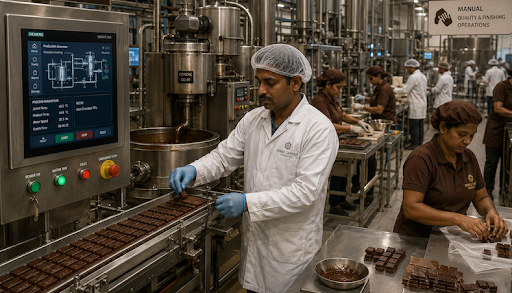
The hot chocolate powder manufacturing market is evolving, as brand owners strive to meet increasing expectations around consistency of flavour, supply, and product quality. A range of smart factory technologies are available to support ingredients processing, formulation, testing, and packaging operations within the same integrated system.
Hot chocolate powder manufacturers will be moving on from the old way of doing things when it comes to automated equipment in 2026. The trend is to put sensors, digital monitoring and predictive maintenance technologies to work in order to spot production problems at an early stage. Such opportunities are of value to a Hot Chocolate Powder Manufacturer, as they can cut down on waste, make for better optimisation of batches and ease the process of scaling to meet demand.
Automated Ingredient Handling and Weighing
Take the matter of automated ingredient handling and weighing. To achieve the right balance of flavour, colour and sweetness in hot chocolate powder, one needs precise formulation. Relying on manual methods for weighing and handling is liable to human error, particularly in a facility that has to deal with several different formulations in the course of a day.
Automated weighing systems will use load cells and programme logic to measure the correct quantities prior to transferring the ingredients into the next processing stage. They can be programmed with target batch values in order to measure and record the weight of each ingredient, or highlight any deviations prior to the formulation going to the next processing step.
The integration of automated conveying will also minimise repetitive manual handling operations and reduce the potential for cross-contamination between ingredients. Enclosed conveying systems will also reduce the risk of ingredient spillage, and the need for additional cleaning activities.
These technologies will support the production of consistent quality hot chocolate powder batches, and free up staff to carry out other value-adding activities such as weighing verification, visual inspection, and documentation.
Internet of Things Sensors and Real-Time Monitoring
By way of the Industrial Internet of Things (IIoT), factory operations are set to become more intelligent. The key is in the integration of sensors that can capture and put out machine and environmental data on a real-time basis.
Take hot chocolate powder production for example: here, such sensors will record the output of each piece of equipment as well as the ambient conditions in the room. Humidity gauges are of special importance in this process. Should the humidity run high, the powder is apt to take on moisture and clump together, resulting in a product with poor free-flowing qualities and an overall decline in quality.
To make sense of all this information, manufacturing and quality assurance personnel have at their disposal a new real-time dashboard for ready access and interpretation. If abnormal room temperatures or fluctuating humidity levels are detected within a production area, this can be investigated and resolved before it impacts the quality of an ongoing production batch.
The ability to read and analyse real-time production metrics will also support more effective production planning and troubleshooting. For example, if an unexpected rise in mixer temperatures is detected, or unusual vibrations are picked up by the sensors, this will help maintenance staff to diagnose the issue more effectively. The integration of IIoT technologies will enable a Hot Chocolate Powder Manufacturer to take greater control over the production process, and make quicker decisions based on accurate data.
Artificial Intelligence for Production Planning
Artificial intelligence (AI) is increasingly being used to analyse the vast quantities of data generated by food manufacturing equipment and production systems. Once the AI programme has been trained on historical production data, it can recognise patterns and recommend production planning and scheduling options.
With regards to Hot Chocolate Powder Manufacturer operations, AI programmes can help to analyse past production data to forecast future ingredient requirements. This will help to balance the need to maintain stock levels, without excess inventory tying up capital. AI can also help to plan the production schedule and anticipate the resources required for different production volumes.
In addition, AI can be used to analyse product quality, production process, and environmental data to flag up any anomalies that require investigation. AI programmes should be used to supplement the expertise of production and quality assurance staff, and not replace trained judgement when it comes to product quality and safety.
The integration of AI technologies will be particularly valuable for manufacturers that produce several different formulations, as it will help to reduce the need for production line changeovers. In the case of hot chocolate powder production, cleaning and setup activities are required between different batch formulations. Reducing the frequency of changeovers will help to optimise production capacity utilisation. As long as appropriate hygiene and quality assurance controls are in place, the risk of cross-contamination across different formulations will be minimised.
Predictive Maintenance for Manufacturing Equipment
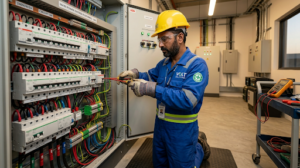
For hot chocolate powder makers, an equipment failure that is not on the calendar can be a very expensive proposition, one that has the capacity to throw off the production timetable and compromise the quality of what is being put out. To head this off, predictive maintenance technologies are employed to spot trouble before it happens, allowing the maintenance team to put in repairs at their convenience.
Sensors on the more critical pieces of manufacturing gear will do the work of gathering and analysing performance data; from this they can flag up any anomalies that point to a fault in the making. As the industry moves to adopt ever more sophisticated automated systems, such predictive measures will only grow in their worth. It is a way of staying ahead of the curve and obviating the reactive maintenance that is called for when a machine goes down without warning.
Predictive maintenance will be particularly valuable in facilities that operate around the clock, with multiple production shifts running on consecutive days. It is important to schedule any potentially disruptive maintenance tasks during an appropriate maintenance window, rather than during a high-volume production run.
As with all smart technologies, it is important to focus predictive maintenance tools and technologies on the most valuable areas of the production process. There may be equipment that is considered to be too small, unreliable, or low-value for integration with a predictive maintenance system. Manufacturers should assess the impact of a potential equipment failure on production capacity utilisation, product quality, and delivery schedules.
Digital Quality Control and Traceability
The quality control requirements for hot chocolate powder production go beyond simple product testing and inspection. Ingredients, formulation ratios, moisture and free-flowing properties, blending consistency, and the integrity of the packaging material, all have an impact on the finished product.
Digital quality control technologies will help manufacturers to integrate production data, test results, and packaging information across the production process. When an inconsistency is detected in a production batch, authorised staff will be able to access the production data and investigate the potential cause of the issue.
Traceability technologies will also support quality control investigations by providing detailed production data about the ingredients and equipment used in a specific batch. If a quality issue is detected, the scope of the investigation can be narrowed down in order to target the source of the problem.
Barcode scanning and automated labelling systems will also reduce the potential for human error in traceability and documentation processes. Combined with appropriate staff training and documented procedures, these technologies will ensure that the quality assurance process is accurate and can be audited if necessary.
Smart Packaging and Automated Inspection
Hot chocolate powder packaging lines are being upgraded with automated filling, sealing, and inspection activities to reduce the potential for product contamination, and to ensure that the final pack integrity is fit for purpose. Moisture ingress through faulty seals or damaged packaging will impact the free-flowing properties of the powder, and compromise the quality of the product.
Automated seal inspection and weigh check systems will help to identify packaging issues prior to dispatch of the finished product. In addition, machine vision inspection systems can be used to ensure that the label quality, print accuracy, and appearance of the packaging is consistent with the product requirements.
The use of automated inspection technologies will also generate production data that can be used for quality assurance purposes. The speed and efficiency of the packaging line can be analysed in order to identify potential problem areas, rather than relying on end-of-line summaries of the production process.
Energy Efficiency and Reduction of Material Waste
Energy-intensive production processes will be monitored and managed using smart energy metres that provide data on energy utilisation across the facility. This information will enable the manufacturer to identify areas for improvement, and to optimise the production schedule in order to reduce energy wastage.
The use of smart energy metres will also highlight any equipment that is using excessive amounts of energy. This can be used to justify investment in new equipment, or to schedule preventive maintenance for ailing motors and other components.
The use of automated dosing and conveying systems will help to reduce the amount of material wastage generated by the production process. Spillage of ingredients or product during the production run will be minimised, with the opportunity to recover the surplus to reduce material costs. This is particularly important for facilities that manufacture a range of hot chocolate powder formulations using the same production lines.
For a Hot Chocolate Powder Manufacturer, the combination of these energy efficiency and waste reduction technologies will support higher production volumes without the need for additional capital expenditure. In addition, the reduction of raw material wastage will contribute to more attractive profit margins. The impact on the environment will be dependent on the level of waste reduction achieved by the facility.
The Role of Suppliers in a Smarter Industry
A Hot Chocolate Powder Manufacturer will benefit from working with reliable ingredient suppliers in order to ensure the quality and consistency of the inputs to the production process. Fluctuations in cocoa quality, particle size, colour, and moisture content will impact the blending and formulation of the hot chocolate powder.
In order to enable a smoother production process, it will be valuable for the manufacturer to work with a supplier that can provide accurate specification information, and a reliable delivery schedule. The availability of this type of information will reduce the need for formulation adjustments, and will support the use of automated processing technology.
Choconutri offers an excellent choice for manufacturers that are looking to explore the opportunities offered by chocolate products and ingredients. When considering the range of ingredients and products on offer, it will be important to consider the formulation and manufacturing requirements, as well as the storage conditions.
Conclusion
Smart factory technologies will transform the way in which hot chocolate powder manufacturers operate, by enabling the use of automated weighing technology, IIoT sensors, predictive maintenance, digital quality record management, and smart packaging inspection systems. These technologies will support the production of consistent quality hot chocolate powders, with reduced production downtime, and the ability to respond to changing demand levels.
Any move to put smart factory technologies in place will call for an outlay on the necessary production equipment and data analysis tools. One should not lose sight of the fact, though, that the success of a smart manufacturing process is contingent on more than hardware; it demands precise data, well trained personnel, preventative hygiene measures and the routine validation of one’s procedures and equipment. For a Hot Chocolate Powder Manufacturer looking ahead to 2026 and after, there will be ever greater value in marrying these new technologies with time-honoured manufacturing methods.